What is Trauma-Conscious Yoga?

The Trauma-Conscious Yoga Method℠ is a healing modality that integrates trauma-informed yoga and somatic psychotherapy practices.
The mission of TCYM is “to make embodied, trauma-informed care more inclusive and accessible for trauma survivors within clinical and non-clinical settings; to provide survivors with a safe, supportive space to reclaim their bodies and empower their own healing and trauma resolution; to inspire conscious conversations about social equity and decolonizing the healing process.”
Trauma-Conscious Yoga Sessions…
I have been trained in the Trauma Conscious Yoga Method since 2018 and have used it in my practice in various ways. Recently, I have found the work of TCYM to be so healing that I have begun offering short-term sessions for adults using the Trauma-Conscious Yoga Method (TCYM). Individuals who may benefit from this approach might have difficulty navigating anxiety, disconnection, relationship wounds, or life transitions, and often have emotional wounds from early life.
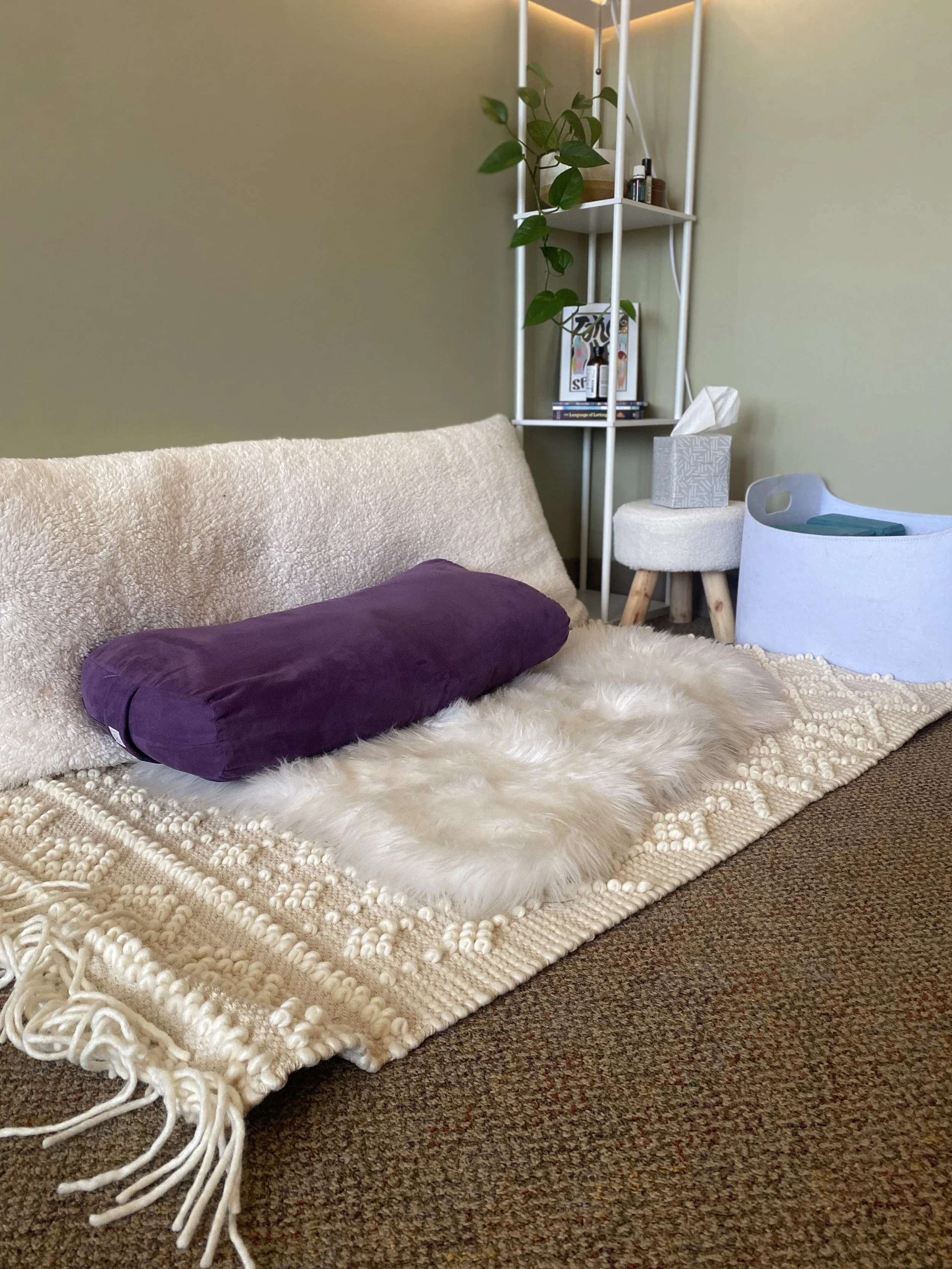
These are not traditional talk therapy sessions, but trauma-informed, body-led spaces rooted in the Trauma-Conscious Yoga Method, somatic attachment work, and IFS. Together, we breathe, move, and regulate at the pace your nervous system needs.
It is my honor to witness others in their unraveling and returning. I am not here to fix you, but to walk beside you—until you remember that the wisdom was within you all along.
Pricing:
Sessions are 75 minutes in length at a rate of $150.
How can somatic movement help me?
“Let your healing be felt, not just thought.”
Somatic therapies are grounded in the understanding that our minds and bodies are deeply connected, and that our life experiences are not only remembered cognitively, but also held physically within the nervous system and body.
One aim of somatic work is to help bring awareness to the ways the body has adapted to stress, while creating opportunities for healing, regulation, and release.
When we experience stress, the body automatically shifts into survival responses such as fight, flight, or freeze. Although these responses were designed to protect us from danger, modern-day stressors like relationship conflict, work pressure, financial stress, or emotional overwhelm can keep the nervous system in a prolonged state of activation. Over time, this may contribute to symptoms such as anxiety, irritability, exhaustion, numbness, disconnection, or feeling “stuck.”
Because stressful and traumatic experiences are often stored in the body and nervous system, not just in conscious thought, traditional talk therapy may only go so far on its own. Somatic therapies integrate body awareness, movement, breathwork, mindfulness, and nervous system regulation to support healing. The goal is to help individuals reconnect with their bodies, process stored stress responses, and experience a greater sense of safety, balance, and ease.
Yoga is considered one of the earliest forms of somatic practice. The word “yoga” comes from the Sanskrit root yuj, meaning to unite or bring together. At its core, yoga is a practice of connection — supporting greater integration between the mind, body, emotions, and spirit.
In recent years, research has increasingly highlighted the mental, emotional, and physical benefits of a consistent yoga practice. There is growing evidence supporting yoga as a complementary approach alongside traditional mental health treatment, particularly when integrated with psychotherapy and other trauma-informed practices.
What Clients are Saying after TCYM Sessions…
“I highly recommend this work for others. I think the somatic movement focused on yoga poses, Breathwork, and mudras is a great way to introduce clients to somatic movement. These sessions are extremely helpful in easing the dysregulation that occurs with those impacted by trauma.”
— N.M.“The emotional and somatic work was absolutely transformative for me- providing visual techniques (e.g., drawings, flash cards) really helped me identify and release emotional blockages. The gentle movements were helpful as well, and the way the therapist cultivated the therapeutic relationship in a way that was very professional yet warm.”
— K. B.“Jessica is a wonderful practitioner. Her trauma-informed somatic sessions and her demeanor were immensely useful to me as I continue to practice what we did in session.”
— L.M.